Park Seasons & Weather: The Reality of Northern Atmospheres
Weather in the Scandinavian subarctic does not follow temperate European rhythms. A single front moving off the Atlantic can drop summer temperatures from 18°C to 1°C within ninety minutes, bringing sleet and 70 km/h wind gusts.
General Cycles vs. Real-Time Broadcasts
This guide explains long-term seasonal mechanics and access periods. We do not publish live forecasts or real-time snow levels. Before every mountain excursion, hikers must inspect the official meteorological authority portals (such as Yr.no or SMHI.se) on the day of departure.
Never rely on phone weather forecasts older than six hours when crossing exposed fell plateaus.
Four-Season Operational Analysis
Park accessibility and necessary field gear change completely across the calendar year:
Summer (Late June – August)
The primary foot-travel season. In the far north, the midnight sun eliminates darkness, allowing round-the-clock progress. However, high-altitude passes retain deep rotten snowbanks until early July. July triggers massive mosquito and midge hatches across boreal forests and bogs. Afternoon thunderstorms and sudden cold rain events are frequent.
Autumn (September – October)
Characterized by clear crisp air, ruska foliage color changes, and the total disappearance of insects. Autumn days shorten rapidly. Night frosts arrive by mid-September. By October, permanent snow covers alpine elevations above 900 meters. Most serviced huts close in mid-to-late September.
Winter (November – April)
Severe cold, short days or polar night, and deep snowpack. Ground hiking trails become completely unusable on foot. Travel requires Nordic touring skis (fjellski) with steel edges or heavy-duty snowshoes. Whiteouts remove all horizon markers. Avalanches present extreme danger in mountain parks.
Spring / Thaw (May – Early June)
The least accessible season for backcountry parks. Snow melts rapidly, causing massive river floods. River crossings become violent, opaque, and impassable. Frozen lake surfaces rot from below, making crossings lethal. Soil is saturated, and foot trails are vulnerable to extreme erosion.
Key Atmospheric Hazards
Field teams must actively monitor three primary atmospheric variables:
- Hypothermia in Wet Rain: The most dangerous temperatures for hikers are between 0°C and 6°C accompanied by precipitation and wind. Wet clothing loses all insulating value. Wind chill drives heat away from the body core rapidly. Complete waterproof shell protection is mandatory.
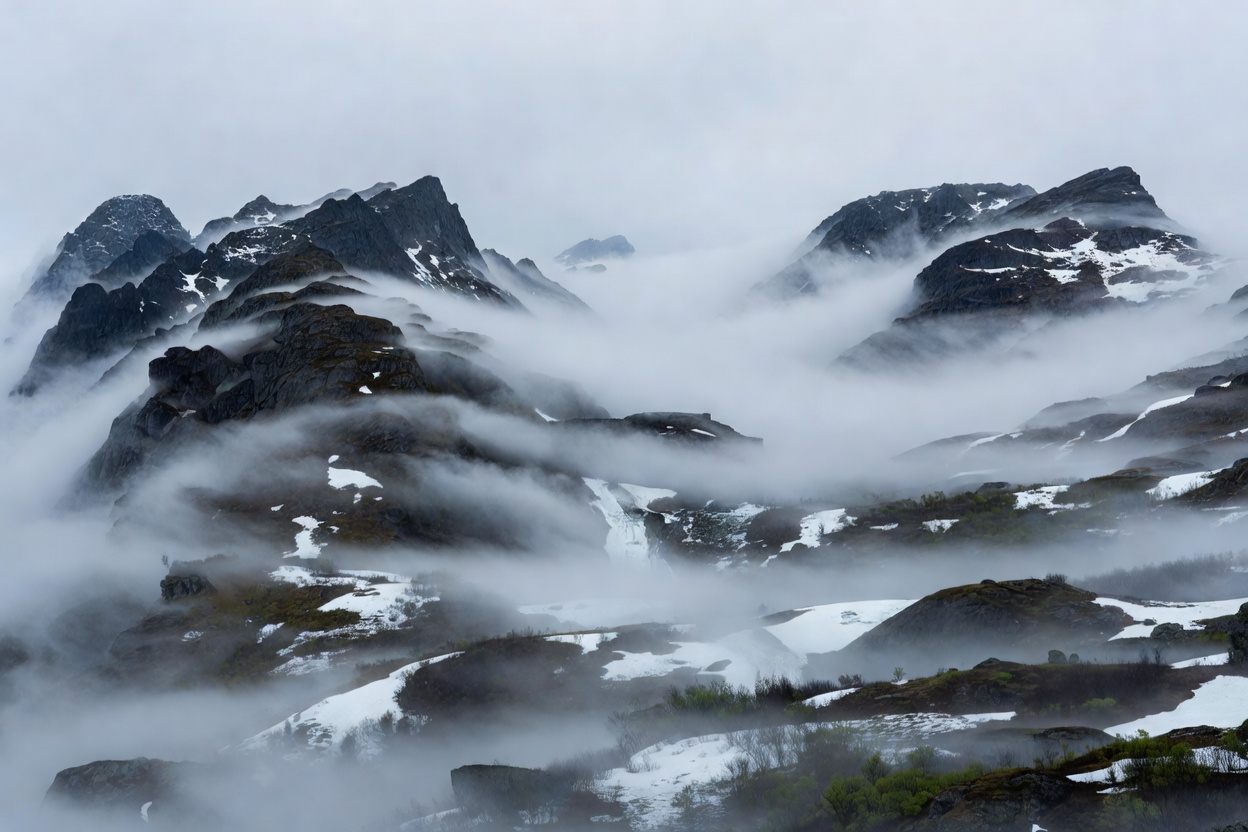
- Whiteout & Hill Fog: Low-hanging maritime stratus clouds can drop visibility to less than 10 meters without warning. All visual depth perception disappears on flat snowfields or uniform blockfields. Navigation must switch to strict compass bearing timing.
- Gale-Force Ridge Winds: Wind accelerates violently through mountain saddles and passes (funneling effect). Winds exceeding 20 m/s make standing upright nearly impossible, and flying gravel causes eye injuries.
Good For
- Hikers who plan flexible schedules with built-in storm weather buffer days.
- Trekkers carrying multi-layer synthetic or hydrophobic down insulation.
- Visitors seeking crisp air and empty trails during early September.
What to Know
- Never begin a high-altitude plateau crossing under an active barometric drop.
- Snow bridges over glacial streams soften rapidly between 12:00 and 16:00.
- Summer daylight does not equal warmth; temperatures regularly freeze at night at 1,000m.
Seasonal Infrastructure Schedules
Parks do not maintain year-round services. Key seasonal cutoffs apply consistently across northern regions:
- Bridges: Summer suspension and plank bridges over heavy glacial torrents are typically installed in late June and dismantled in late September. Hiking outside these dates requires hazardous detours or unbridged fording.
- Public Shuttles: Rural bus routes linking train terminals to national park trailheads (such as Gjendesheim or Kvikkjokk) run on strict summer timetables, typically ending when schools reopen in late August.
- Staffed Huts: Huts offering hot meals and warm dorms operate for limited 8 to 10 week summer windows and brief late-winter ski seasons (March–April). Unstaffed emergency rooms remain open year-round with firewood and blankets.
Have Seasonal Timing Inquiries?
Contact our editorial desk for details regarding seasonal infrastructure windows and weather planning fundamentals.